By Shannah Mort, Executive Director, James Madison Museum of Orange County Heritage, Orange, Virginia
I have attended conferences before, but walking into my first AASLH conference felt different. As the Executive Director of a museum in rural Virginia, I knew this was a bigger stage, a national conversation, and the Douglas Evelyn Diversity Fellowship made it possible for me to have a seat at the table. Turns out, it was exactly the seat I needed.Rhode Island felt like the right place for this gathering.
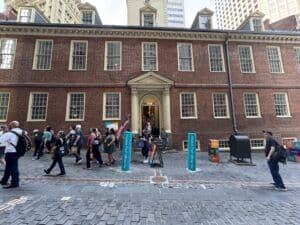
Rhode Island does not let you forget its history. I spent time across the region, venturing into Massachusetts to walk Boston’s Freedom Trail, where ordinary people made decisions that changed everything. Standing at the Old South Meeting House, the Paul Revere House, and the Old North Church, I kept thinking about the theme of the conference, the work of revolution, and what that phrase actually means for those of us doing this work in small communities with small budgets and very large ambitions.
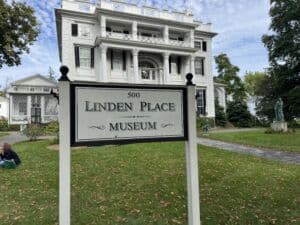
The Revolution in Rhode Island tour was eye-opening, and the Northern Urban Enslavement in Bristol tour stayed with me long after it ended. Walking on those streets and thinking about the work I do every day with descendants of enslaved people and the African American community of Orange County, I recognized what Bristol is doing because it is the same work we are trying to do at home. The tour brought together a bigger picture of enslavement, one that stretched far beyond the large southern plantations that dominate the popular imagination. Standing before Linden Place, a grand mansion built entirely with the proceeds of a single transatlantic slave trade voyage, made the brutal economics of slavery impossible to look away from. Naming what happened. Honoring who was there. Telling the truth even when it is hard.
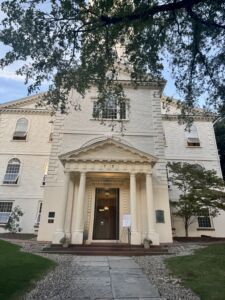
The Public Plenary, Freedom of and From: Church and State in 1636, 1776, and 2026, held at the First Baptist Church in America, was an experience I will not forget. As Executive Director of The James Madison Museum of Orange County Heritage, I found myself drawing a line from Roger Williams’ belief in freedom of conscience directly to James Madison’s later writings on liberty and religious freedom. These ideas did not appear out of nowhere. They traveled through time and through people, and they still matter deeply today.
The Justice for All Diversity and Inclusion Mixer was honestly one of my favorite nights. I did not just collect business cards. I made real friends, people I expect to still be talking to long after Providence.
What I brought home to Virginia is harder to put into a bullet point. It is a feeling. Being in that space with so many historians working just as hard as I am to make sure the whole story gets told and that no one gets left out of history reminds me why I do this. I came home empowered. I came home inspired. I cannot wait to see everyone next year in Madison, Wisconsin.