View of Over-the-Rhine district from the rooftop of Rhinegeist Brewery.
By Danielle Duffy, Appalachian Women’s Museum, Dillsboro, NC
I initially wanted to attend my first AASLH conference to learn about the organization’s many resources and the STEPS program. I am the only staff member for a small museum, the Appalachian Women’s Museum housed in a historic farmstead in western North Carolina. We are in a transitional period and looking to live up to our name through professionalizing the space and expanding our community engagement. I came away with a deep appreciation of Cincinnati, plenty of information and resources, and a full cup primed to engage our community through historic conversations.
History in Cincinnati is not just a few saved buildings, a historic district, or stories of the city, but are part of the identity. Unprovoked, workers throughout the city would include historic tidbits about a building or the businesses that were housed within. It seemed like every building or corner had some story to tell and the people of Cincinnati were eagerly willing to share it.
I traveled to the conference alone, so my nerves were a little on edge and I felt that a little networking lubrication was needed. Thankfully, the historic brewery tour was offered on Wednesday. Growing up in Milwaukee and working in the brewing industry for nearly twenty years, geeking out on breweries is like a warm blanket for me. Aaron Deninger, executive director of the Brewery District Community Urban Redevelopment Corporation, led our geographically self-selected group through the historic Over-the-Rhine district. Historic structures and brewing history stretched as far as the eye could see with lagering tunnels below our feet. After the tour, a band of us set off to taste some of the current brewing offerings. My first goal of the conference was met; the earliest connections lubricated my networking gears, setting the stage for the rest of the conference.
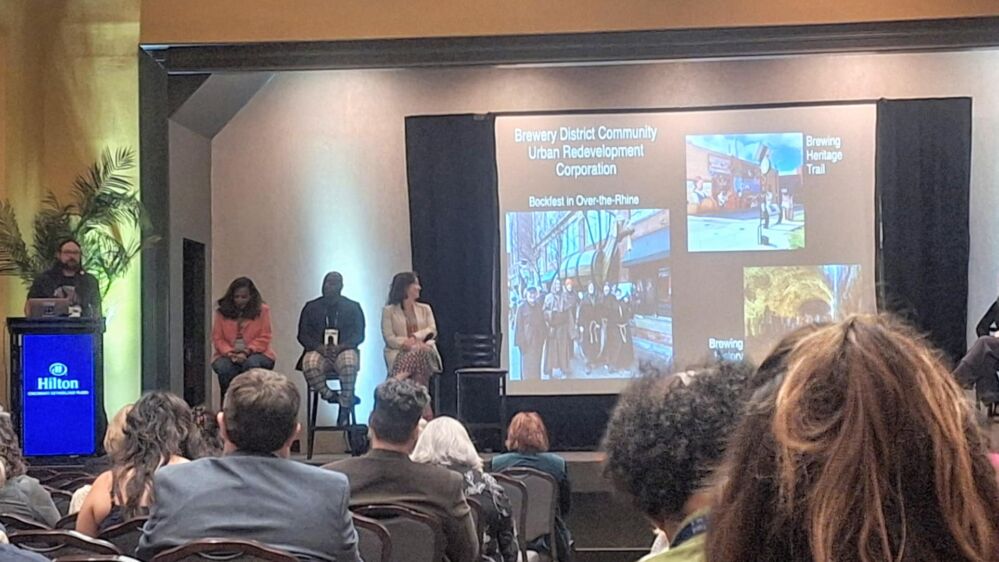
Closing plenary at the conference.
As a national conference the AASLH is certainly one of the larger conferences I have ever attended, but it never felt overwhelming. The tangible benefits of conferences like the chance to learn from colleagues through sessions and being informed about the current state of affairs in our field are important. But the intangibles, the connections and commiseration of kindred spirits are the fuel that energized my return home. AASLH clearly understands the power of connection with the volume of structured and unstructured networking opportunities provided. I found the women’s history group happy hour to be another particularly fruitful opportunity: people were inviting and the meet-up was relaxed. It doesn’t hurt that I represent a museum called the Appalachian Women’s Museum!
Thank you to AASLH for selecting me as the recipient of the Small Museum scholarship. The resources gained and connections made will help us on our path to continue reaching for our mission at the Appalachian Women’s Museum to collect, preserve and share the stories of southern Appalachian women past, present and future. I hope we will see you again in 2026.
Every year, AASLH’s Small Museums Committee raises money to bring small museum employees and volunteers to the Annual Conference. The scholarship covers the cost of registration and includes additional funds to offset travel and/or lodging expenses. The application opens in the spring and closes in June for that year’s conference scholarship. Learn more and donate to the scholarship fund here.